
Child Play Therapy
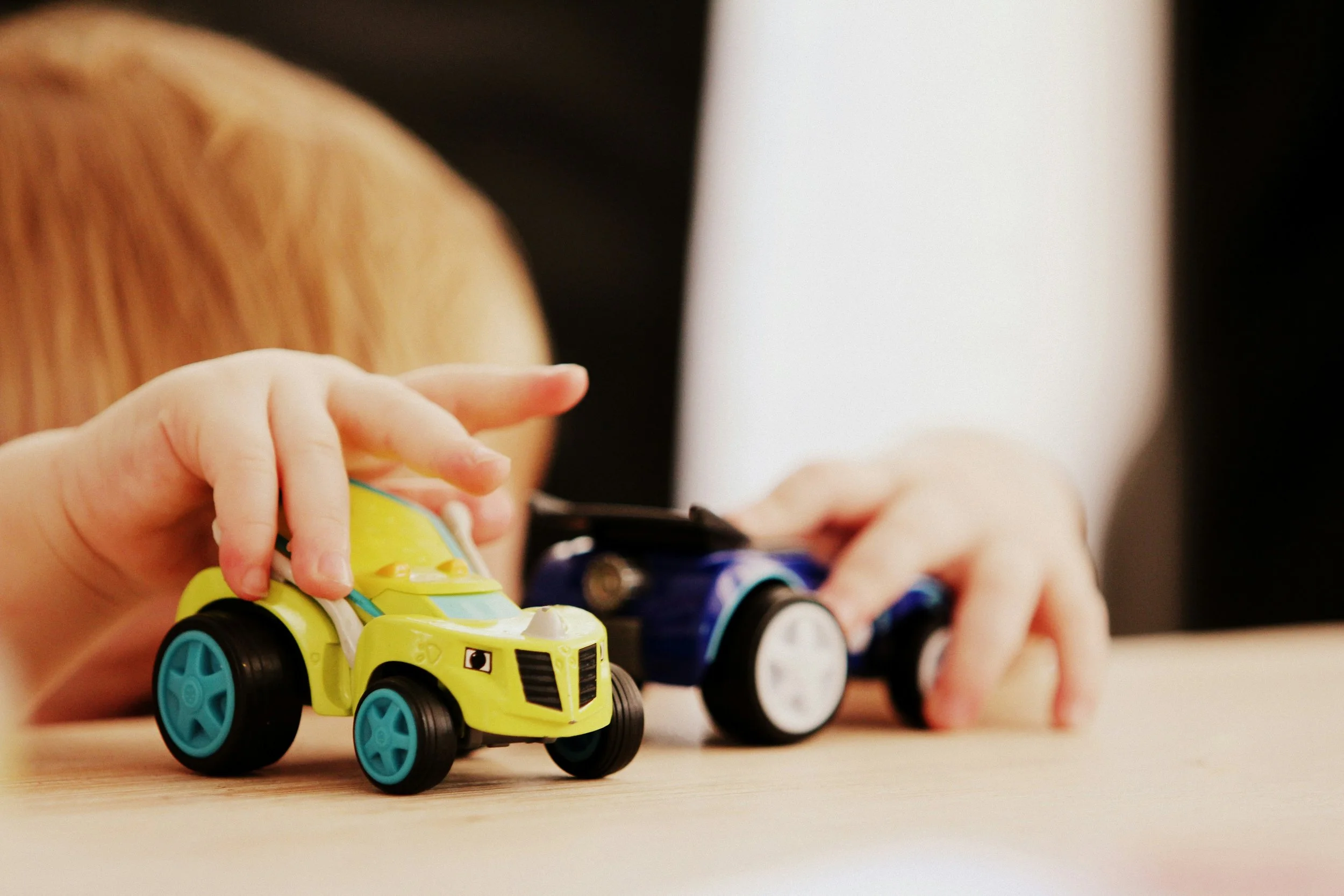
Play therapy is a developmentally appropriate approach that helps children express their thoughts, feelings, and experiences through play rather than words. Since children communicate most naturally through play, toys, art, storytelling, and imaginative activities become their language in the playroom.
Why Play Therapy?
Children do not always have the words to express what they are feeling or experiencing- but they do have play. Play is a child’s natural language, and through it, they communicate emotions, process life events, and make sense of their world. Child-centered play therapy meets children where they are developmentally, offering a safe and supportive space where they can express themselves freely without the pressure to use words.
In the playroom, carefully selected toys and materials become tools for expression, helping children work through challenges such as anxiety, big emotions, behavioral struggles, family changes, grief, or social difficulties. With the support of a trained play therapist , children begin to build emotional awareness, strengthen self-regulation, and develop a more secure sense of self.

Supports emotional expression
Builds coping and
problem-solving skills

Strengthens self-esteem and confidence

Promotes resilience and emotional growth
Frequently Asked Questions
-
In play therapy, children are given a safe space to express thoughts, feelings, worries, and experiences through play rather than relying on words. Since children communicate best through toys, art, movement, and imagination, play becomes the language of therapy.
-
Play therapy can support children experiencing anxiety, big emotions, grief, family challenges, trauma. school stress, friendships struggles, ADHD and autism.
-
In Child-Centered Play Therapy, the child leads the session while the therapist follows. Rather than directing activities or asking questions, the therapist creates a warm, accepting place where the child can choose what to play with and how to spend the session.
It often looks playful from the outside, but underneath the play, children are working through important emotional experiences and building new skills.
A child may move between toys, art, sand tray, pretend play, puppets, games, dollhouse, costumes, or sensory items. The therapist pays close attention to the child’s play, emotional themes, body language, and choices. Instead of trying to fix the child or steer the play, the therapist reflects what the child is doing, noticing feelings, and helps put words to the child’s inner experience.
-
If your child is showing signs of anxiety, behavioral changes, difficulty expressing emotions, or is going through a major life transition, play therapy can help. It offers a safe space for them to process what they’re experiencing and build healthy coping skills.
-
To become a Registered Play Therapist through the Association of Play Therapy, here are a few of the things a therapist needs:
A master’s degree in a mental health field
150 hours of play therapy-specific instruction.
350 hours of direct client contact using play therapy
35 hours of play therapy supervision
Start Your Journey in 3 Steps
Step 1 - Complete the Inquiry Form
Share a few details so we can understand your needs.
Step 2 - Connect With Us
We’ll reach out to discuss fit, answer questions, and recommend next steps.
Step 3 - Book Your First Appointment
Let’s get started!